
Last updated: April 15, 2026
Key Takeaways
- A network cabling installation Minneapolis business owners trust starts with a proper survey, certified components, and labeled terminations — not the lowest bid.
- Expect to spend $150 to $300 per drop for Cat6 in a typical Minneapolis commercial build, with fiber backbone runs adding $8 to $15 per linear foot.
- Budget three to four weeks from kickoff to handoff for a mid-size office, including permits, install, certification, and documentation.
- Pulling Cat5e in 2026 is a ten-year mistake. Cat6 is the floor; Cat6A is the smart default for new Minneapolis offices.
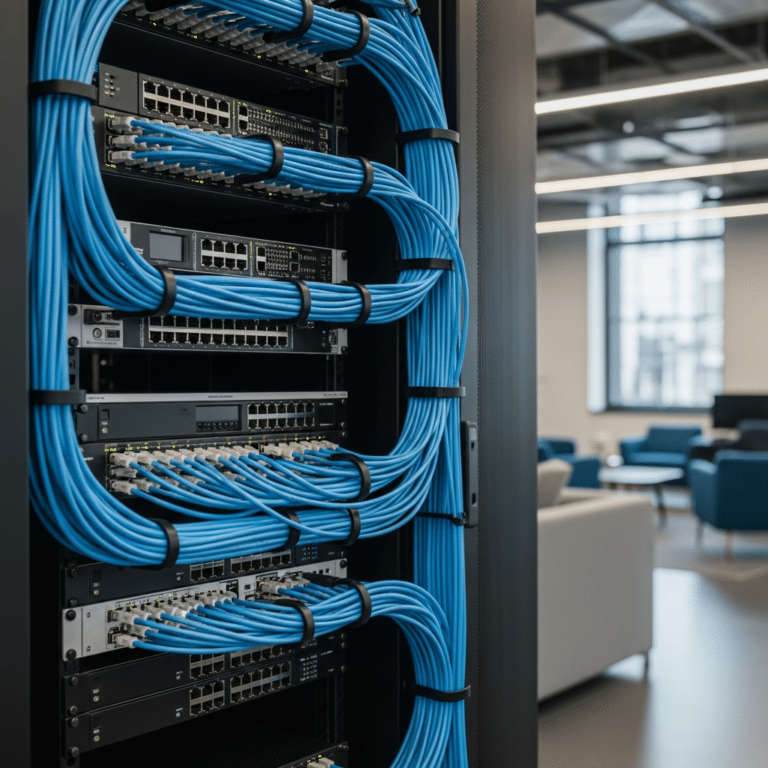
A bad network cabling installation Minneapolis businesses live with it for ten or fifteen years. You will remember it every time a port goes bad, every time a new tenant moves into the suite, and every time someone says “why is the Wi-Fi slow in that corner again.”
This guide walks through exactly what a real commercial cabling project looks like, what to budget, and what to put in writing before any installer pulls a single foot of cable. It is written for Minneapolis business owners, office managers, and IT directors who are about to take on a new build, a remodel, or a long-overdue rewire.
Businesses that want a deeper look at standards, compliance, and long-term planning should read our Data Structured Cabling Installation In Minnesota guide before finalizing any scope.
For a deeper look at standards, materials, and project planning, see our companion resource on Network Cabling Installation In Minneapolis.
What Network Cabling Installation Actually Includes
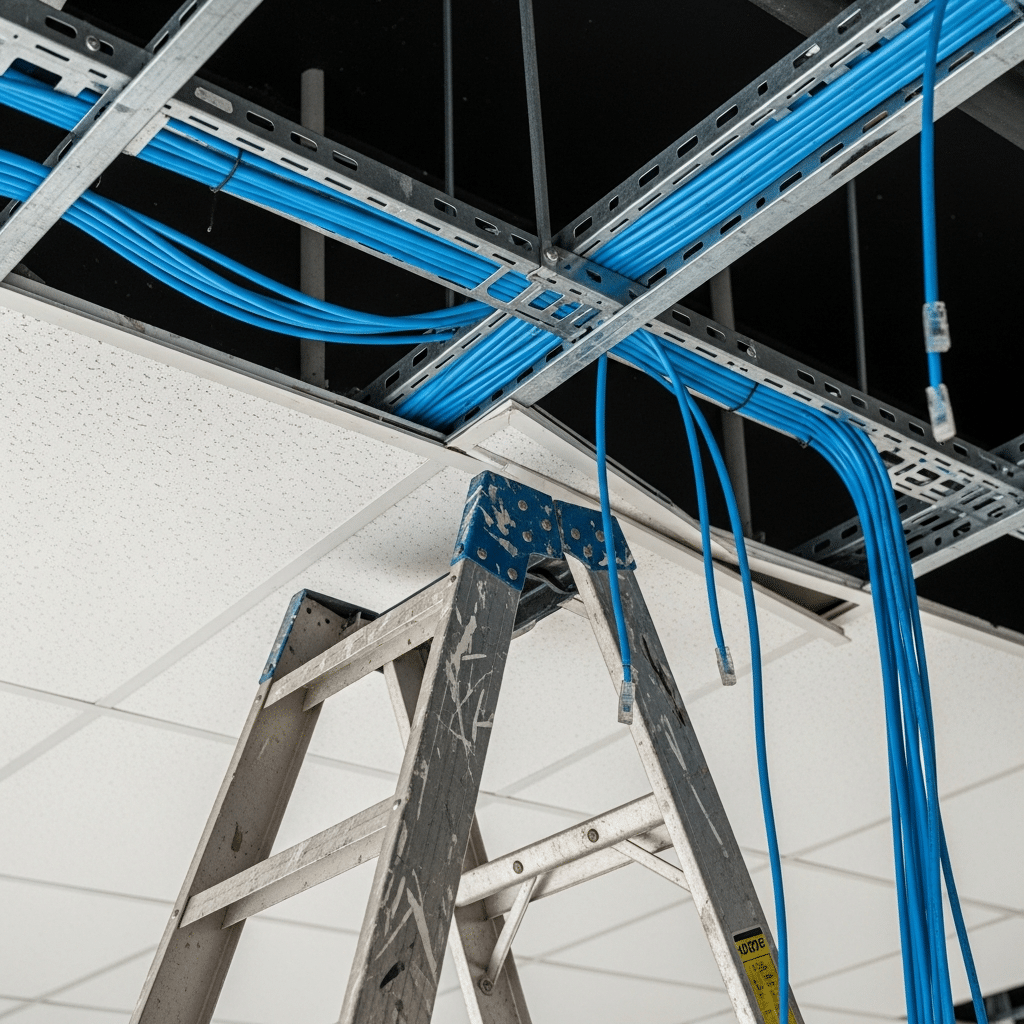
A proper commercial cabling project is more than running wire. It includes a pre-install site survey, a written cable-pathway plan, permits where Minneapolis code requires them, fire-stopped penetrations, labeled terminations at both ends, and a certification report for every single drop.
The best installers also plan for what comes next: they leave spare capacity in the pathways, document everything so the next tech can take over, and hand off as-built drawings you can actually read. If your cabling job is part of a bigger IT project, a tighter coordination with the Minneapolis business phone system install will save you a second ceiling-tile visit later.
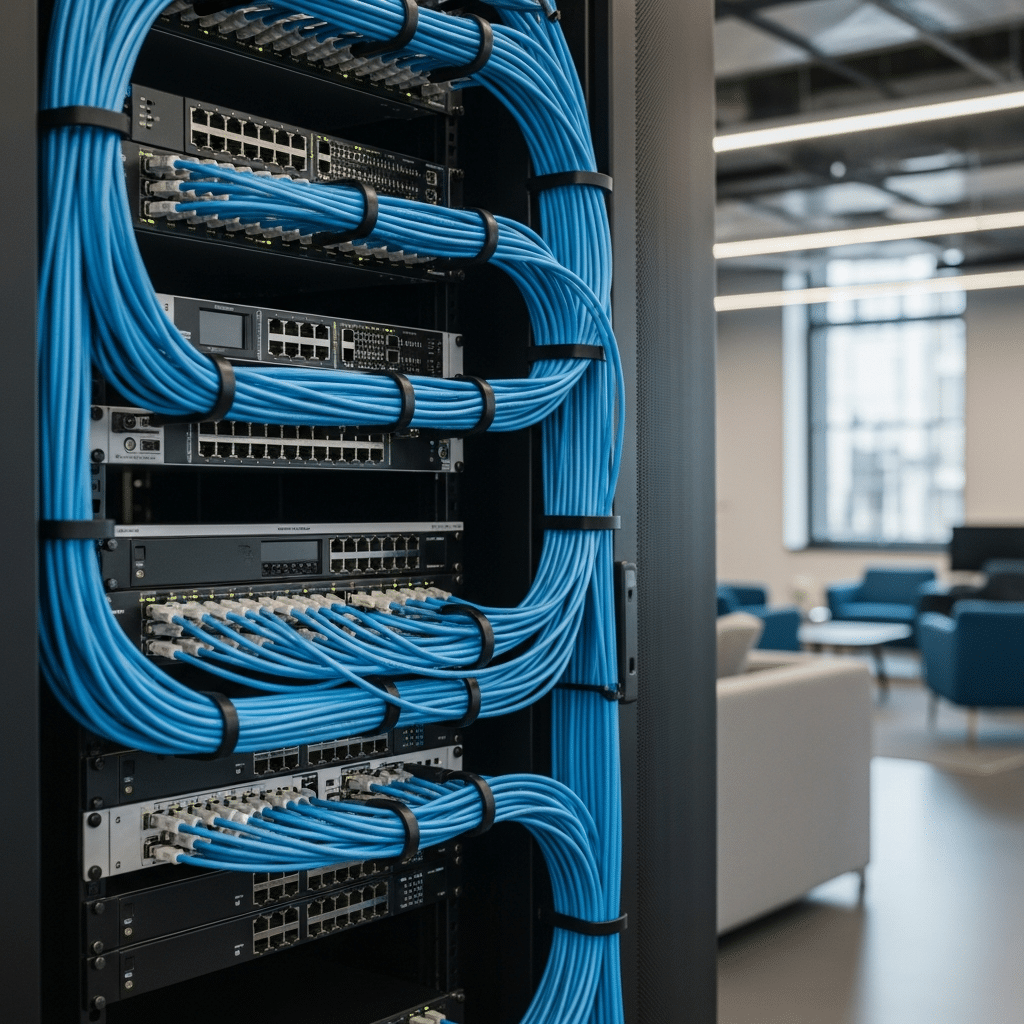
The rest of this article explains how to plan, scope, and price a network cabling installation Minneapolis commercial buildings require, and how to avoid the two or three mistakes that cost real money on year two.
Cat6, Cat6A, or Fiber: Pick the Right Standard Once
Cat6 — the floor
Cat6 supports 1 Gbps at the full 100 meter run and 10 Gbps at shorter distances. It is the minimum standard for any commercial job in 2026. Pulling Cat5e to save $40 per drop is a decision you will regret by year three.
Cat6A — the smart default
Cat6A handles 10 Gbps at the full 100 meters, works better around electrical interference, and future-proofs the building for another ten years (BICSI Information Transport Systems Standards, 2024). The incremental cost is usually $40 to $80 per drop over Cat6. For a Minneapolis office build you expect to occupy for more than five years, Cat6A is almost always the right call.
Fiber — the backbone
Single-mode fiber runs the vertical backbone between IDF closets and the main distribution frame. It carries bandwidth copper cannot touch and is immune to electrical interference. A typical Minneapolis commercial build uses fiber between floors and Cat6A to the workstation.
What Network Cabling Costs in Minneapolis
Minneapolis commercial cabling typically runs $150 to $300 per Cat6 drop for a standard 100-foot run in a drop-ceiling office space. Cat6A drops usually run $200 to $380. Fiber backbone runs add $8 to $15 per linear foot depending on strand count and termination type.
Watch for change orders on anything the installer did not see during the survey: sealed conduit, asbestos tile, historic-building restrictions, or union-labor rules in downtown Minneapolis properties. Those line items are the single biggest surprise on year-one invoices.
Why Minneapolis Buildings Need Extra Planning
Minneapolis presents a few commercial cabling challenges that national installers often underestimate. The city has extreme winter and summer temperature swings, which matter for exterior conduit runs and riser pathways. Many downtown buildings have century-old structures that require extra care for penetrations and fire-stopping.
A local Minneapolis installer knows which property managers approve work fast, which buildings require after-hours install windows, and which union locals have jurisdiction over commercial riser work. That context is worth a lot on install day. It is the same reason we recommend local Minneapolis VoIP phone system support to any business that depends on call quality.
Red Flags in a Cabling Proposal
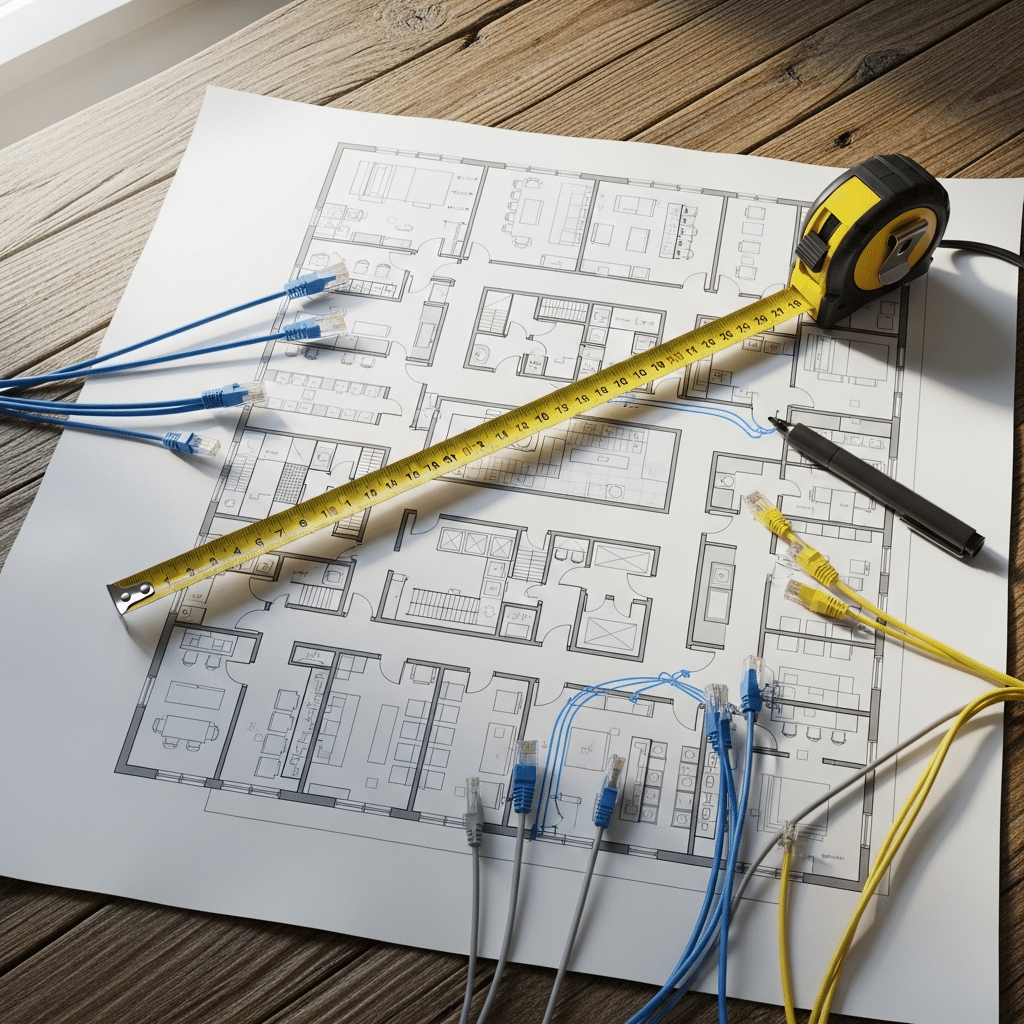
A proposal that does not list Cat category, number of drops, termination type, certification level, and a written warranty is not a proposal. It is a wish. Get the same scope from at least two installers so you can compare apples to apples.
Watch for the word “approximately” on anything that should be a hard number. Approximate drop counts turn into change orders. A proper installer walks the space, counts every wall plate, and prices to the drop.
Also watch for installers who will not provide Fluke or equivalent certification reports. Without certification, you have no independent proof the cable can carry the bandwidth you paid for. If the port fails on day 90, a certification report is the difference between a warranty fix and a bill.
Frequently Asked Questions
How much does network cabling installation cost in Minneapolis?
Minneapolis commercial cabling typically runs $150 to $300 per Cat6 drop and $200 to $380 per Cat6A drop for a standard office install. Fiber backbone runs add $8 to $15 per linear foot depending on strand count.
How long does a network cabling install take for a Minneapolis office?
A typical mid-size Minneapolis office build takes three to four weeks from kickoff to handoff. That includes survey, permits, install, certification, and as-built documentation.
Cat6 or Cat6A — which should I install in Minneapolis?
For a space you plan to occupy more than five years, Cat6A is almost always the right call. It handles 10 Gbps at the full 100 meter run, works better around electrical interference, and future-proofs the building for another decade.
Do I need a permit for network cabling in Minneapolis?
Many Minneapolis commercial cabling jobs require a low-voltage permit, especially when penetrations are involved or when the work touches fire-rated walls. Confirm with the city and your property manager before install day.
What should I get in writing before the installer starts?
Get the cable category, exact drop count, termination type, certification level, warranty terms, and the installer’s point of contact in writing. A proposal without those numbers is a wish, not a scope.
If you want a straightforward conversation about what a real network cabling installation Minneapolis businesses should expect, Switchback Systems is happy to walk through the checklist with you. Start with network cabling and wiring services for Minneapolis businesses and bring any notes from the guide above.

About the author
Steve Dempsey - Owner
Steve Dempsey is the owner of Switchback Systems, a Minneapolis PBX and VOIP phone-system specialist that has supported local businesses for over 20 years across brands like Vertical, Avaya, and Nortel.
