
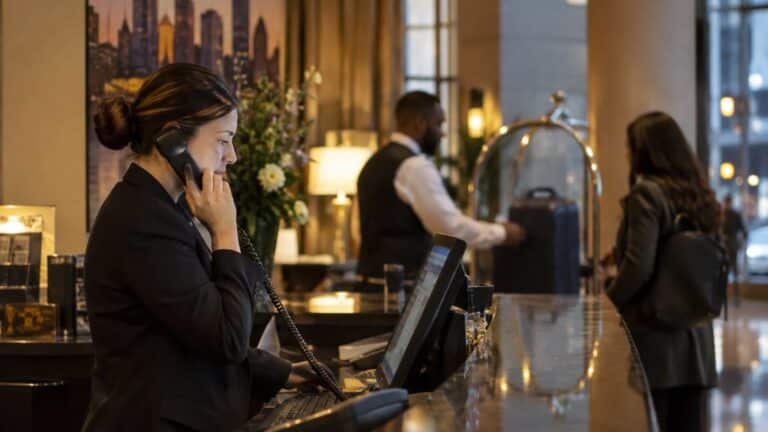
A hotel phone system is the communication backbone of every Minneapolis, MN hospitality property, connecting guests to front desk staff, emergency services, and room service with a single handset. Choosing the right system means comparing features that keep guests safe, streamline operations, and integrate with the tools your property already uses.
This guide breaks down the essential features every Minneapolis hotel should evaluate, from 911 compliance to property management system integration, so you can make an informed decision without wading through vendor jargon.
Key takeaways from this article:
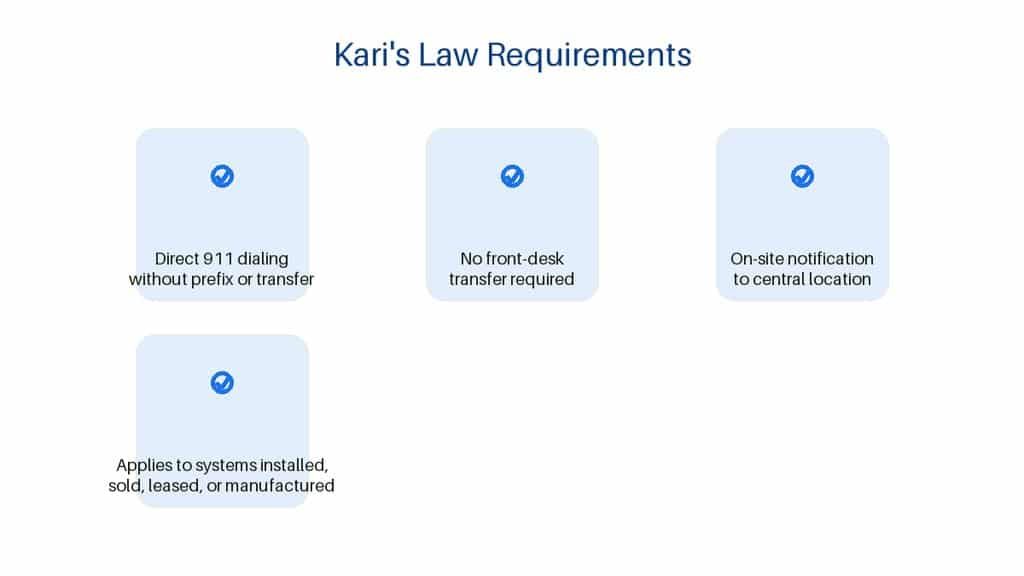
- Direct 911 dialing with on-site notification is federally mandated for all hotel phone systems under Kari’s Law and must be configured before any guest calls the front desk.
- Dispatchable location data including room and floor information is required under RAY BAUM’S Act and Minnesota MLTS rules for every 911 call placed from a hotel property.
- Cloud-based VoIP hotel phone systems replace bulky on-premises PBX hardware with central online management, reducing maintenance burden and physical equipment footprint.
- Property management system integration automates call billing, room status updates, and check-in or check-out phone feature changes without manual front-desk intervention.
What a Hotel Phone System Must Do for Guest Safety
Guest safety is the first and non-negotiable function of any hotel phone system. Every handset in every room must reach 911 directly without requiring a prefix, front-desk transfer, or any other dialing step that could delay emergency response.
Kari’s Law mandates this direct dialing capability nationwide, and it applies to multi-line telephone systems installed, sold, leased, or manufactured after February 16, 2020. The law also requires that on-site notification be sent to a central location when a 911 call is placed, alerting staff that an emergency is unfolding and where it originated.
Why Dispatchable Location Data Matters for Minneapolis Hotels
When a guest dials 911 from a hotel room, the answering public safety answering point needs more than the street address. RAY BAUM’S Act requires that multi-line telephone systems transmit dispatchable location information, which means the specific room number, floor, or other granular detail that lets first responders find the caller quickly.
Minnesota has adopted its own multi-line telephone system rules that align with federal requirements, meaning Minneapolis hospitality properties must ensure their phone system vendor can configure and validate this location data down to the individual endpoint. Failure to deliver accurate dispatchable location information can delay emergency response and expose the property to liability.
How Cloud-Based VoIP Changes Hotel Phone System Management
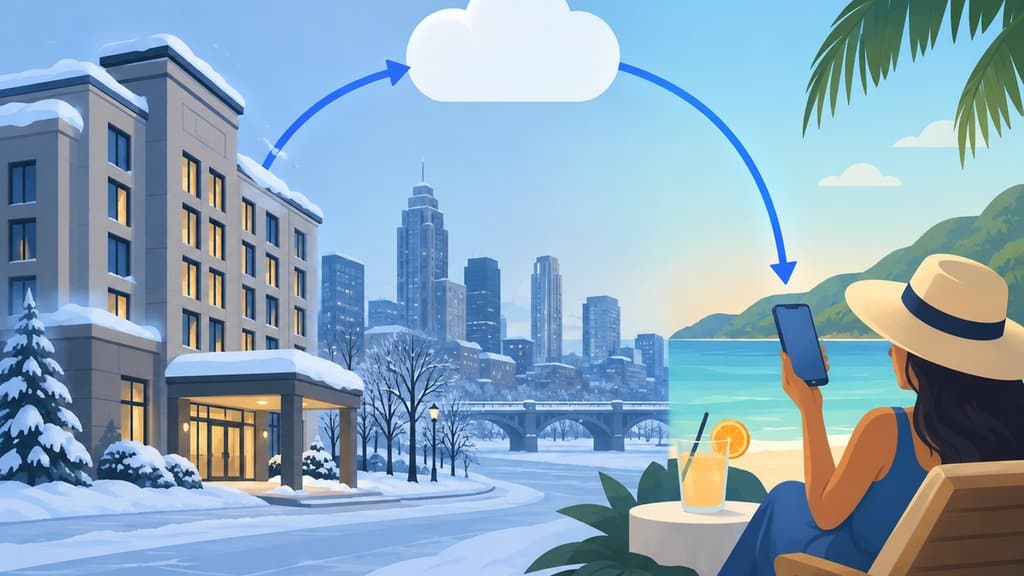
Traditional hotel phone systems relied on on-premises PBX cabinets, dedicated copper wiring, and specialized technicians for every configuration change. Cloud-based VoIP hotel phone systems move the switching intelligence to a hosted platform managed through a web interface, letting property managers add extensions, change room assignments, or update voicemail greetings from any browser.
This shift reduces capital expenditure on hardware and eliminates the need for on-site PBX maintenance visits for routine changes. For Minneapolis properties with seasonal occupancy fluctuations or renovation cycles, cloud management means scaling up or down without forklift upgrades to physical equipment.
Property Management System Integration for Operational Efficiency
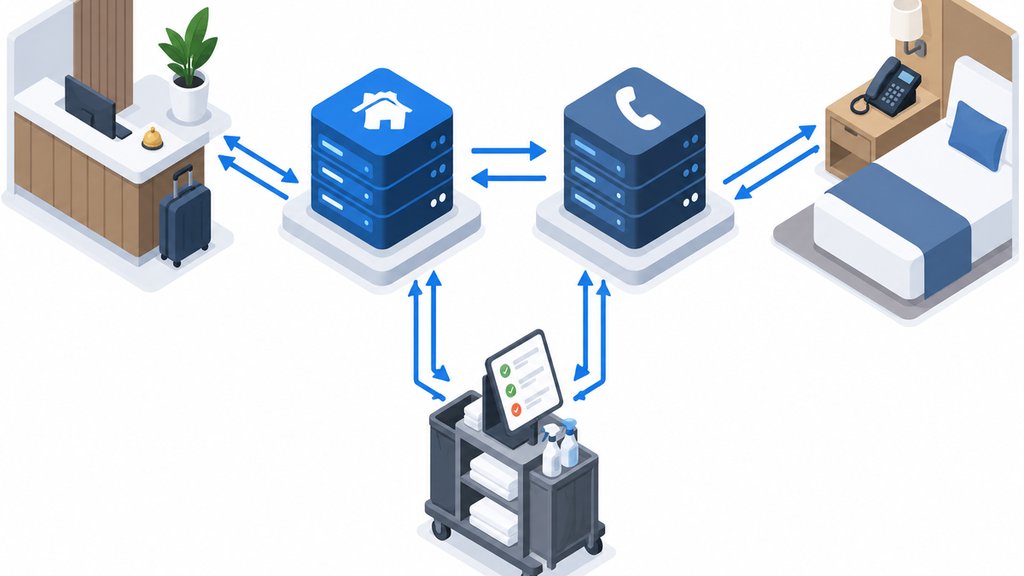
A hotel phone system that operates in isolation from the property management system creates manual work at the front desk. Integration through middleware platforms enables automatic synchronization between the PMS and the phone system, so when a guest checks in, the room phone activates with the correct features, caller ID, and billing codes.
When that guest checks out or moves to a different room, the system updates automatically. Housekeeping status changes, do-not-disturb settings, and wake-up call schedules can also flow between systems, reducing the chance of a front-desk oversight leading to a guest complaint or missed revenue.
Legacy PBX Support and Modern IP-PBX Compatibility
Not every Minneapolis hotel is starting from scratch. Many properties operate legacy PBX systems from manufacturers like Avaya, Nortel, Panasonic, or Vertical Communications that still have productive years remaining, and a full rip-and-replace may not fit the capital plan.
Switchback Systems supports and maintains these legacy PBX systems, providing phone system expertise that extends equipment life while evaluating migration paths to VoIP or cloud solutions. For properties already on IP-PBX platforms, integration with PMS and other hotel systems can handle check-in and check-out functions, room charging, and service features without replacing the core platform.
Local Installation and Ongoing Support from Switchback Systems
Switchback Systems is a Minneapolis, MN-based business communications company with over 20 years of phone system support and expertise serving local businesses. The company provides hotel phone system installations and upgrades, VoIP services, and communication cloud solutions with hands-on support from experienced telecommunications engineers.
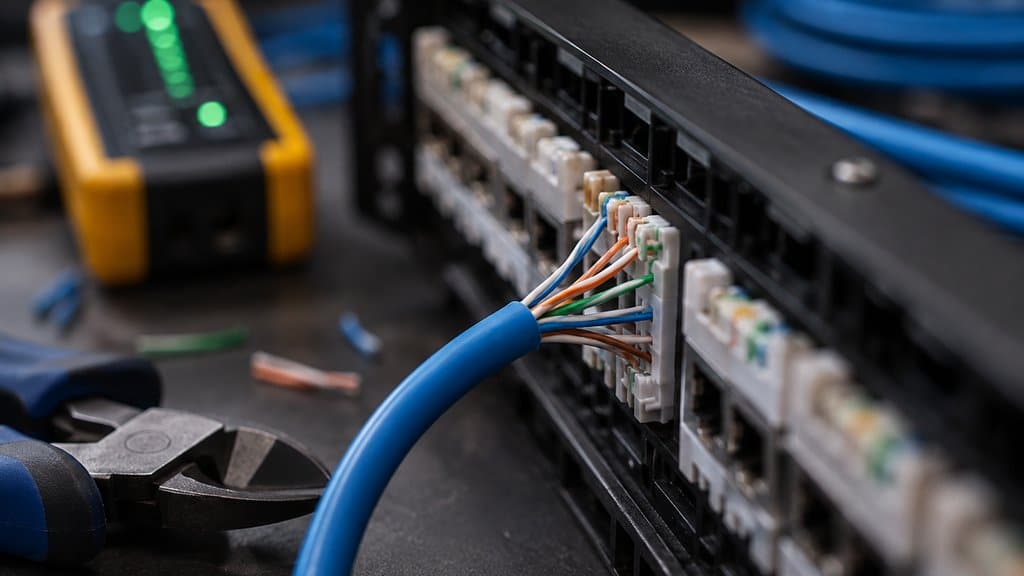
Switchback Systems uses Cat6 cabling for all network wiring and cable installations, offering superior speed and bandwidth compared to older Cat5 cables. The company also provides remote maintenance and training services, a user portal and recording interface, and structured cabling for security systems, audio systems, and electrical systems in addition to standard data and voice needs.
Scalable Call Routing for Seasonal Minneapolis Tourism Swings
Minneapolis hospitality revenue fluctuates dramatically between summer festival months and quiet winter stretches. A hotel phone system must scale call capacity up or down without hardware swaps or service disruption.
Cloud-native architectures let properties activate additional call paths during Twin Cities Marathon weekend or U.S. Bank Stadium events. Staff simply toggle licenses through a web portal rather than waiting for technician visits.
Automatic call distribution rules should shift overflow to mobile devices when front desk lines flood. This prevents abandoned calls during peak check-in windows without permanent seat expansion.
Seasonal staffing patterns in Minneapolis hotels demand extension reassignment tools that work in minutes. Housekeeping temps need voicemail boxes today and none next month.
Reporting dashboards reveal which seasonal periods strain voice infrastructure most. General managers use this data to negotiate flexible licensing terms before busy seasons arrive.
Some Minneapolis boutique properties share concierge staff across multiple locations in winter. A unified system lets those floating employees log into whichever property they serve that day.
Switchback Systems designs scaling plans around actual Minneapolis occupancy calendars rather than generic growth projections.
Guest Room Phone Customization and Brand Consistency
Every guest room telephone represents a touchpoint where operational function meets brand impression. Minneapolis hotels competing on experience cannot afford generic default greetings or mismatched hold messaging.
Modern systems allow custom auto-attendant voices that welcome guests in tones matching lobby aesthetics. A North Loop boutique sounds different than an airport convention property, and phones should reflect that.
Multilingual prompts serve Minneapolis’s international business travelers and visiting medical patients at institutions like the Mayo Clinic affiliate locations. Staff record or upload greetings without vendor dependency.
Wake-up call interfaces can incorporate local weather, event reminders, or property announcements. Guests receiving automated morning calls hear relevant context rather than robotic time announcements.
Phone display screens show property logos, local recommendations, or spa booking shortcuts. These micro-interactions accumulate into perceived attention to detail that drives review scores.
Minneapolis hotels near the Chain of Lakes might highlight bike rental hours on guest room displays. Downtown properties could feature skyway navigation tips during winter months.
Switchback Systems programs these customizations during initial deployment and trains local staff to modify them independently. Brand evolution does not require service tickets or additional fees.
Disaster Recovery and Business Continuity for Harsh Minnesota Winters
Minneapolis hotels face unique continuity risks from ice storms, extreme cold, and power grid strain. Voice communication must survive when physical access to the property becomes impossible.
Cloud-hosted phone systems automatically reroute calls to cell phones or alternate locations when internet fails at the primary site. Guests still reach reservations even if the building closes temporarily.
Geographic redundancy matters for properties near the Mississippi River flood zones or in aging downtown infrastructure. Switchback Systems maintains Midwest data center presence with automatic failover protocols.
On-premises battery backup for IP phones provides hours of operation during brief outages. Extended failures trigger preconfigured mobility rules that preserve guest services without manual intervention.
Winter storm staffing shortages create situations where skeleton crews manage multiple roles. Single-number reach functionality rings desk phones and mobile devices simultaneously so fewer people cover more responsibilities.
Post-disaster communication with arriving guests prevents dangerous travel attempts. Mass notification tools built into modern systems send voicemail, text, or email updates about closures or modified services.
Switchback Systems tests failover procedures during Minnesota’s mild seasons so winter emergencies execute smoothly. Properties verify continuity plans rather than discovering gaps during actual crises.
Frequently Asked Questions
What federal laws govern 911 dialing from hotel phones?
Kari’s Law requires direct 911 dialing without prefixes on multi-line telephone systems, and RAY BAUM’S Act requires transmission of dispatchable location information including room or floor detail. Both laws apply to hotel phone systems nationwide, including all Minneapolis, MN properties.
Can a hotel keep its existing PBX system and still upgrade features?
Yes. Switchback Systems supports and maintains legacy PBX systems from Avaya, Nortel, Panasonic, and Vertical Communications, extending equipment life while adding capabilities or planning a gradual migration to VoIP or cloud-based solutions.
What does PMS integration actually automate for hotel staff?
PMS integration automates call billing, room move updates, status changes, and feature provisioning so the phone system reflects current guest occupancy without manual front-desk configuration for each arrival, departure, or room change.
Why does cabling quality matter for a hotel phone system?
Cat6 cabling provides superior speed and bandwidth compared to older Cat5 cables, supporting modern VoIP traffic, future network expansion, and reliable connectivity for voice, data, security, and audio systems throughout the property.
How can Minneapolis hotel owners evaluate a phone system vendor?
Compare compliance configuration for 911 direct dial and dispatchable location, cloud versus on-premises management options, PMS integration capability, legacy system support, and local installation and maintenance availability from a provider with demonstrated hospitality experience.
How does a hotel phone system handle power outages differently than traditional lines?
Modern cloud-based hotel phone systems use battery backup for short outages and automatic call forwarding to mobile devices for extended failures. Unlike copper POTS lines that may fail with building power, IP systems with proper continuity planning keep reservation lines and guest services operational even when staff cannot physically reach the property.

About the author
Steve Dempsey - Owner
Steve Dempsey is the owner of Switchback Systems, a Minneapolis PBX and VOIP phone-system specialist that has supported local businesses for over 20 years across brands like Vertical, Avaya, and Nortel.
