

A business phone system installer in Minneapolis, MN should do more than drop phones on desks and walk away. The right partner evaluates your cabling, confirms network readiness, ports your numbers, and tests every endpoint before your team makes the first call.
This guide explains what Minneapolis companies should ask before signing a proposal, from deployment options and on-site scope to ongoing maintenance and support coverage.
Key takeaways from this article:
- Ask whether the installer confirms Minneapolis and Twin Cities coverage in writing before work begins.
- Verify which deployment architectures the installer supports: VoIP, cloud PBX, platform-integrated systems, SIP trunking, and contact center setups.
- Request clarity on physical scope: cabling, number porting, post-installation testing, and whether a pre-installation site survey is available.
- Define maintenance responsibilities upfront, including remote support availability and who handles future moves, adds, and changes.
What a Business Phone System Installer Actually Does
A business phone system installer designs, deploys, and activates the infrastructure that connects your employees to customers and vendors. That work spans physical cabling, network configuration, phone provisioning, number porting from your existing carrier, and post-install testing to confirm dial tone, call routing, and voicemail functionality.
Some Minneapolis providers also bundle voice and data cabling, network assessments, and infrastructure repair into the same project. This matters because a phone system that relies on VoIP or cloud PBX cannot perform well on a network with outdated wiring, unmanaged switches, or insufficient bandwidth.
Deployment Options to Discuss with Any Installer
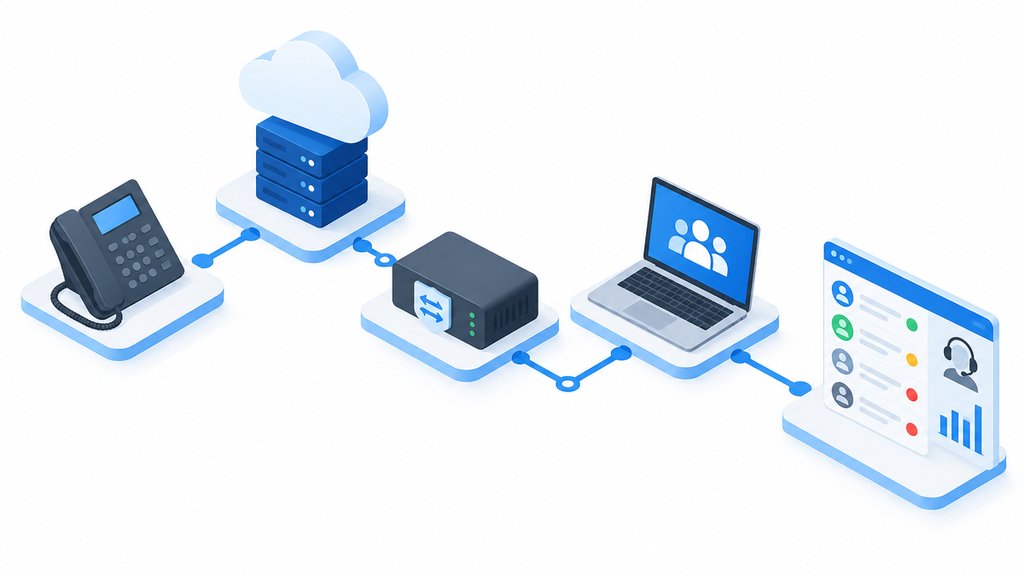
Modern business phone systems come in several architectures, and not every installer supports all of them. VoIP services route calls over your internet connection, cloud PBX hosts the system off-site with the vendor, and platform-integrated solutions such as Microsoft Teams Phone embed voice into collaboration software your staff already uses.
If your business is still running a legacy PBX and considering a move to internet-based calling, our Voip Migration Checklist covers the planning steps, network readiness checks, and cutover timeline you will need before talking to an installer.
SIP trunking replaces traditional PRI lines with virtual channels over broadband, which can reduce recurring carrier costs. Contact center systems add queuing, analytics, and workforce management for businesses with higher call volumes.
Ask your installer which architectures they have deployed in Minneapolis environments similar to yours.
On-Site Installation Scope and Physical Readiness
Physical installation scope varies widely between providers. Some business phone system installers handle only the phone hardware and software configuration, while others also pull voice and data cabling, terminate jacks, and certify cable performance.
Number porting is another critical task: moving your existing business numbers to the new carrier or platform requires coordination, correct paperwork, and realistic timelines that often stretch beyond the hardware installation date. Post-installation testing should include inbound and outbound call flows, intercom paging, auto-attendant behavior, and emergency dialing verification.
Site Surveys, Estimates, and Network Preparation
A pre-installation site survey lets an installer assess your cabling plant, network switch capacity, power over Ethernet availability, and physical phone locations before quoting the project. Not every local provider offers this, but it reduces surprises that delay go-live dates.
Network and voice infrastructure readiness directly affects call quality on VoIP and cloud systems. Voice and data cabling should meet current performance needs, and your LAN should prioritize voice traffic to prevent dropouts during heavy data use.
Some Minneapolis installers combine phone-system installation with structured cabling services to address both layers in one plan.
Maintenance, Support, and Long-Term Responsibilities
The installer’s job does not end at go-live. Maintenance and support responsibilities should be defined in the proposal, including who handles firmware updates, adds new users, reconfigures call flows, and troubleshoots quality issues.
Remote maintenance capabilities can reduce response time for routine changes without requiring an on-site visit.
Ask whether training is included for administrators and end users. A phone system with advanced features delivers no value if your staff cannot transfer calls, set up conference bridges, or access voicemail remotely.
Clear documentation of what the installer covers versus what your internal IT staff handles prevents gaps in support coverage.
How Switchback Systems Supports Minneapolis Business Communications
Switchback Systems is a Minneapolis, MN-based business communications company with over 20 years of phone system support and expertise in the local area. The company provides on-premise PBX phone systems, VoIP phone services, hosted cloud phone solutions, and hotel phone systems for the hospitality sector.
Switchback Systems supports and maintains legacy PBX systems for major brands including Vertical, Avaya, and Nortel, helping businesses extend the life of existing equipment rather than forcing premature replacement. The company uses Cat6 cabling for network wiring and cable installations, offering superior speed and bandwidth compared to older Cat5 cables.
Services include structured cabling, data cabling, voice cabling, and fiber optic cable installation as part of comprehensive network wiring solutions. Switchback Systems also provides network cabling for security systems, audio systems, and electrical systems in addition to standard business network needs.
Remote maintenance and training service for phone systems is available, including tailored support for church clients throughout Minnesota. The company serves Minneapolis, St. Paul, Hennepin County, Chisago County, and the broader Twin Cities metro area from its downtown Minneapolis location.
Understanding Installer Certifications and Manufacturer Partnerships
Not every business phone system installer carries the same credentials. Manufacturer certifications indicate that technicians have completed formal training on specific platforms.
These partnerships often unlock better warranty terms and priority support channels. Ask your Minneapolis installer which brands they are officially authorized to install and service.
Certified installers typically receive direct technical escalation paths. This matters when complex interoperability issues arise during deployment.
Some manufacturers require partnership tiers based on completed installations and technician counts. Higher tier status can translate to faster parts availability.
Verify whether certifications are current rather than expired. Technology evolves rapidly, and outdated credentials may leave your system vulnerable to misconfiguration.
Independent installers without brand ties can offer flexibility across multiple platforms. However, they may lack access to proprietary diagnostic tools and firmware updates.
Request documentation of certifications before signing any agreement. Reputable providers will share this information without hesitation.
Timeline Realism and Project Milestones
Installation timelines vary dramatically based on system complexity and infrastructure readiness. A straightforward cloud migration may conclude in days, while premise-based deployments span weeks.
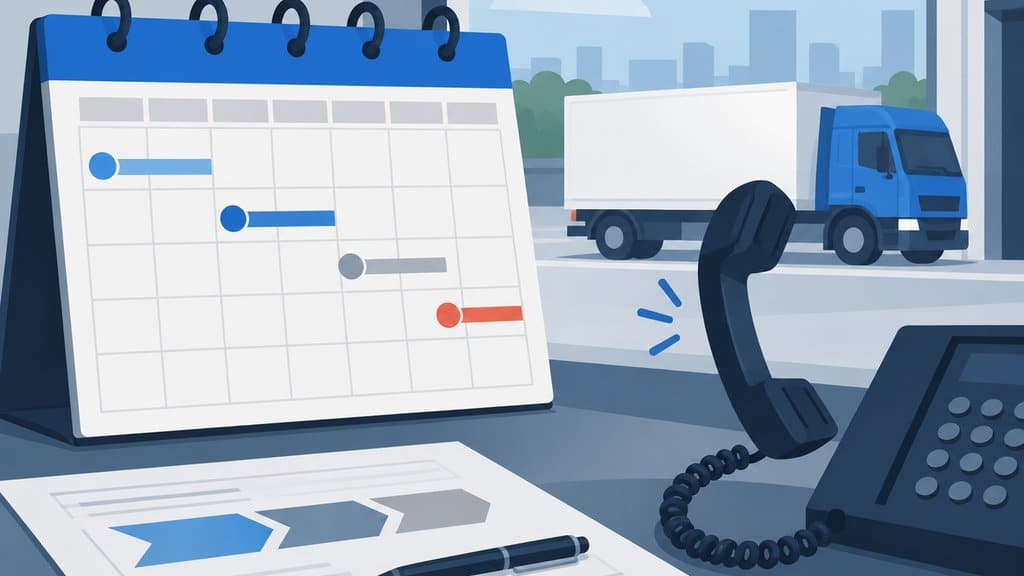
Demand a phased milestone schedule from your Minneapolis installer. Clear checkpoints help you track progress and identify delays before they cascade.
Ask specifically about lead times for hardware procurement. Supply chain disruptions continue to affect phone system components unpredictably.
Factor in your own internal readiness, including staff availability for training. Installers who ignore your operational calendar create friction during cutover.
Test environment setup should appear as a distinct milestone. Rushing past this phase increases risk of production failures.
Discuss contingency buffers for unexpected building conditions. Older Minneapolis commercial properties often conceal outdated wiring that complicates installation.
Insist on a defined go-live criteria checklist. Both parties should agree on what constitutes successful completion before technicians depart your site.
Security Protocols and Data Handling Practices
Phone systems now carry sensitive business communications and customer data. Your installer’s security practices deserve scrutiny comparable to any IT vendor.
Inquire about background check policies for technicians accessing your premises. Unvetted personnel introduce unnecessary risk to physical and network security.
Discuss how configuration backups are stored and protected. Installer-hosted backups should employ encryption and access controls you can verify.
Clarify whether remote management tools remain active post-installation. Persistent access channels require explicit authorization and monitoring protocols.
Ask about disposal procedures for replaced hardware containing stored data. Simply discarding old phones may violate compliance requirements.
Voice traffic encryption capabilities should be addressed during planning. Modern systems support TLS and SRTP, but proper implementation requires expertise.
Document all security-related responsibilities in your service agreement. Ambiguity here creates liability gaps that surface only after incidents occur.
Frequently Asked Questions
What should I ask a business phone system installer about local coverage?
Ask whether the installer explicitly confirms service coverage in Minneapolis and the surrounding Twin Cities area in writing. Some providers serve the core seven-county metro while others extend into additional counties, so clarity prevents dispatch delays later.
Which phone system deployment options should an installer support?
A capable installer should support VoIP, cloud PBX, platform-integrated systems such as Microsoft Teams Phone, SIP trunking, and contact center configurations. The right architecture depends on your existing infrastructure, budget, and whether your staff already works inside a specific collaboration platform.
Does a phone system installer handle physical cabling and network work too?
Some do and some do not. Ask whether the installer pulls voice and data cabling, terminates jacks, certifies cable performance, and integrates with your existing network switches.
Bundling this work with the phone project reduces coordination overhead and compatibility risk.
What maintenance and support should be defined in the installation proposal?
The proposal should specify who handles post-installation moves, adds, changes, firmware updates, and troubleshooting. Ask about remote maintenance options, training availability for your staff, and whether emergency support carries different terms than standard business-hours coverage.
How can I verify an installer has experience with my existing phone system brand?
Request references from similar deployments, including legacy PBX environments if you plan to maintain current hardware. Ask specifically about experience with your brand and whether the installer stocks common replacement components or relies entirely on third-party fulfillment.
How should I evaluate an installer’s project timeline and milestone structure?
Request a detailed phased schedule with hardware procurement lead times, test environment setup, and go-live criteria clearly defined. Confirm contingency buffers exist for unexpected conditions, and verify the timeline accounts for your internal staff availability during training and cutover periods.

About the author
Steve Dempsey - Owner
Steve Dempsey is the owner of Switchback Systems, a Minneapolis PBX and VOIP phone-system specialist that has supported local businesses for over 20 years across brands like Vertical, Avaya, and Nortel.
